
Restaurants, bars, cafés and event venues · Windsor-Essex
Restaurant acoustic panels in Windsor that keep the buzz and stop the shouting
When guests lean in and ask "What did you say?", your room is ringing. I measure the echo, show you a render of the fix, then install custom restaurant acoustic panels after you close. Then I re-measure from the same marked spots, so you see the change on a graph.
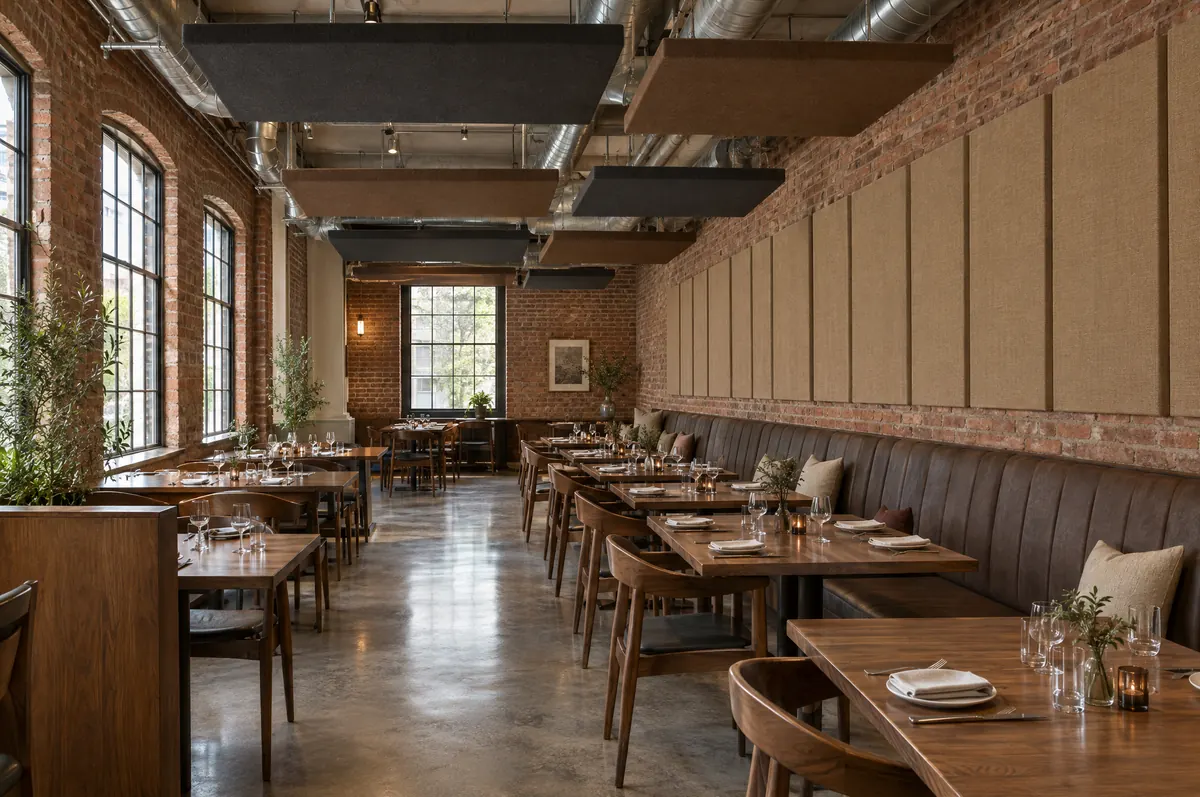
The problem, in numbers
Diners ranked noise as their top complaint, ahead of service
Echo time (RT60) is how many seconds a sound takes to fade away. Brick, glass, tile and concrete bounce sound back into the room, so every voice hangs in the air.
In a 2016 Consumer Reports diner survey, noise was the top restaurant complaint. Loud customers and blaring music ranked ahead of service.
That is how long sound often rings in a hard-finish restaurant. The target for a restaurant is 0.5 to 0.9 seconds, with about 0.7 as the ideal.
Source: Commercial Acoustics, Reverberation Time for Different Rooms.
Why it snowballs
Past about 1 second of echo, guests start talking louder
Above about 1.0 second, guests raise their voices to be heard over the echo. This is called the Lombard effect. The next table does the same, so the whole room keeps getting louder.
Your servers work inside that noise for a full shift, so they go home worn out.
Here is where restaurants sit next to other rooms:
- Restaurant0.5–0.9 s target · 1.2–1.6 s untreated
- Meeting room0.5–0.7 s target · 0.8–1.2 s untreated
- Open office0.4–0.6 s target · 0.9–1.2 s untreated
- Small theatre0.8–1.2 s target · 1.3–1.8 s untreated
Reverberation time (RT60) at speech frequencies, empty room. Source: Commercial Acoustics, Reverberation Time for Different Rooms.
Free, at your door
Ask for a free 60-second Sound Score
Give me one clap and 60 seconds, and I'll tell you roughly how long your room rings.
I stop by, clap in your dining room and read the echo time on the spot. You get a ballpark number to hold up against the 0.5 to 0.9 second target.
A clap or a phone app gives a ballpark only. The paid Sound Assessment uses Room EQ Wizard and a calibrated microphone, measured from marked spots across the room.
I visit restaurants in Windsor, Tecumseh, LaSalle, Lakeshore, Amherstburg, Essex, Kingsville and Leamington.
Example
How many panels a loud café needs, worked out
I size every job by calculation. The Sabine formula links echo time to the room's size and how much sound it soaks up. Doubling the absorption roughly halves the echo time.
| Example café | Number |
|---|---|
| Floor area | 1,200 sq ft |
| Ceiling height | 11 ft |
| Echo time now | 1.3 s |
| Target echo time | 0.8 s |
| Panels needed | About 310 sq ft |
| With a safety margin | About 355 to 370 sq ft |
Example only. Your numbers come from measuring your room. For a rough count first, try the acoustic panel calculator.
Design first
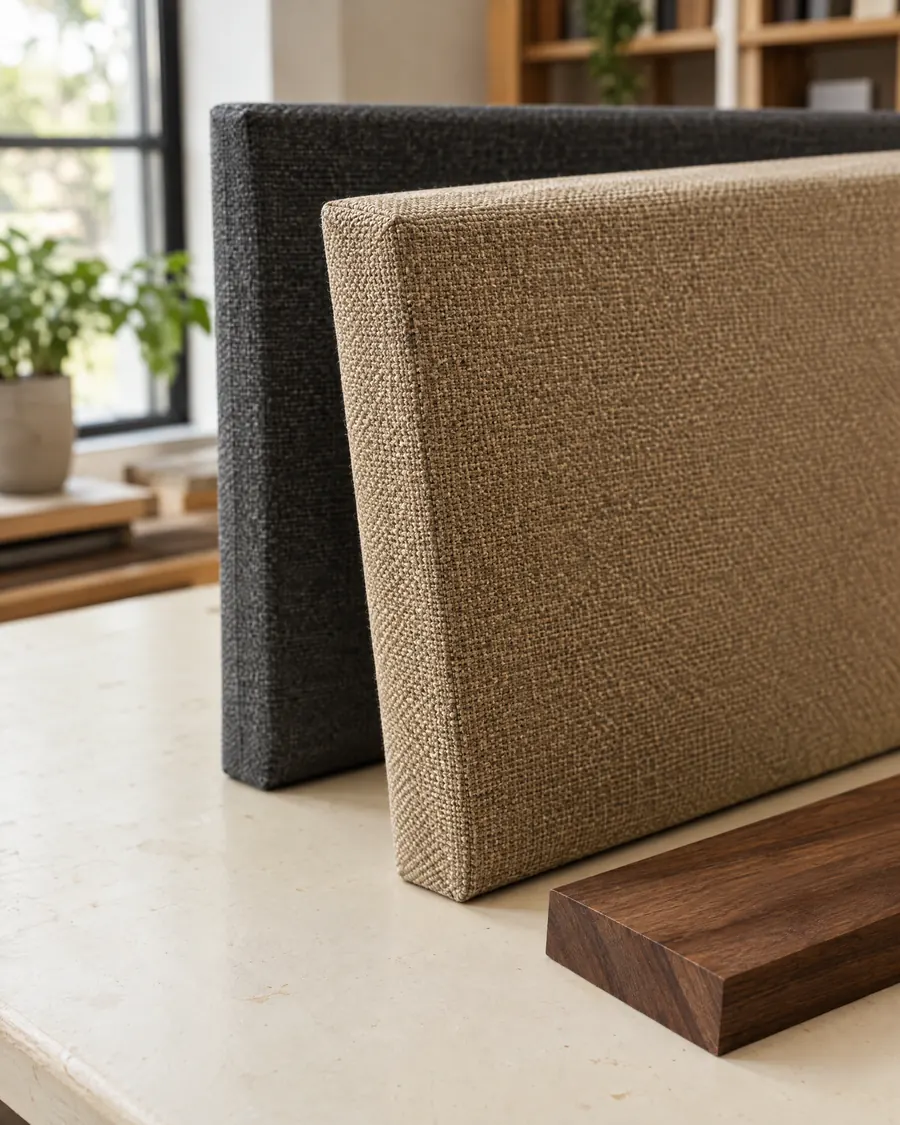
Panels that look like they were always part of the room
Before anything is built, you see a concept render of your room with the panels in place. You pick the fabrics and colours, so the panels suit your brick, wood or paint.
The ceiling usually comes first, because it is the largest hard surface. A common rule of thumb covers 25 to 40% of the wall and ceiling area with panels that soak up a lot of sound.
Source: Commercial Acoustics, Reverberation Time for Different Rooms.
How it works
Six steps, with the install done while you're closed
Consult
A free 15-minute call. You tell me about the room and the problem, and we decide together if measuring makes sense.
Measure
I measure echo time from marked microphone spots, plus background noise, room size and photos. It takes 45 to 120 minutes on site.
Render
Within 72 hours of the assessment, you get a concept render and a written proposal with options. The target echo time is written into it.
Fabricate
Your panels are fabricated in Canada to the size the calculation calls for. Your proposal confirms the timing.
Install
I install after close or on your closed day. The room is cleaned up before your first guest walks in.
Prove
I re-measure from the same marked spots and show you the before and after graph.
Questions
What owners ask about restaurant acoustic panels
We can't close. When do you install?
After your last guest leaves, or on your closed day. The room is cleaned up and ready before you open.
What about fire safety and inspections?
For businesses, I document the fire rating of the panel core and fabric, keep panels out of exits, and plan around sprinkler heads, alarms and exit signs. Ceiling panels in a sprinklered space wait for a licensed sprinkler contractor's review. Your building and fire officials have the final say.
Why will my room sound different when it's full?
Echo targets are measured at speech frequencies in an empty room. A full room reads lower, because people soak up sound too.
Can I buy panels online instead?
You can. Online panels come in stock sizes, and nobody measures your dining room to say where they go. With me you pay for the measurement, panels made to match your room, an install after close and a second measurement. For smaller budgets, I can make a placement plan and a kit you hang yourself.
What happens to the assessment fee if we go ahead?
The $495 business Sound Assessment covers rooms up to about 3,000 sq ft, and larger venues are quoted. It is 100% credited to your project if you sign within 30 days.
Treating an office or a home studio too? See boardroom acoustic panels and home studio acoustic panels.
Keep the buzz
Your room stays lively, and guests stop shouting
For dining, I aim for 0.6 to 0.8 seconds: lively, and clear across the table.
Strip out too much echo and a dining room feels like a library. This target keeps the energy, and guests still hear each other at a normal voice. That is the room where people stay for dessert.
The target goes in writing in your proposal. After install, I re-measure from the same marked spots to show you where the room landed.
Find out how long your room rings
Book a free 15-minute Sound Consult. Tell me about your room, and I'll tell you if a door Sound Score or a full assessment makes sense.