
Paradox Acoustic Design
Acoustic panels in Windsor that make loud rooms easy to talk in.
We measure your room's reverberation, designing a custom acoustic treatment plan for your space.
Data-Driven Interior Solutions. We measure with a calibrated microphone before anything is made. After install, we measure again from the same marked spots.
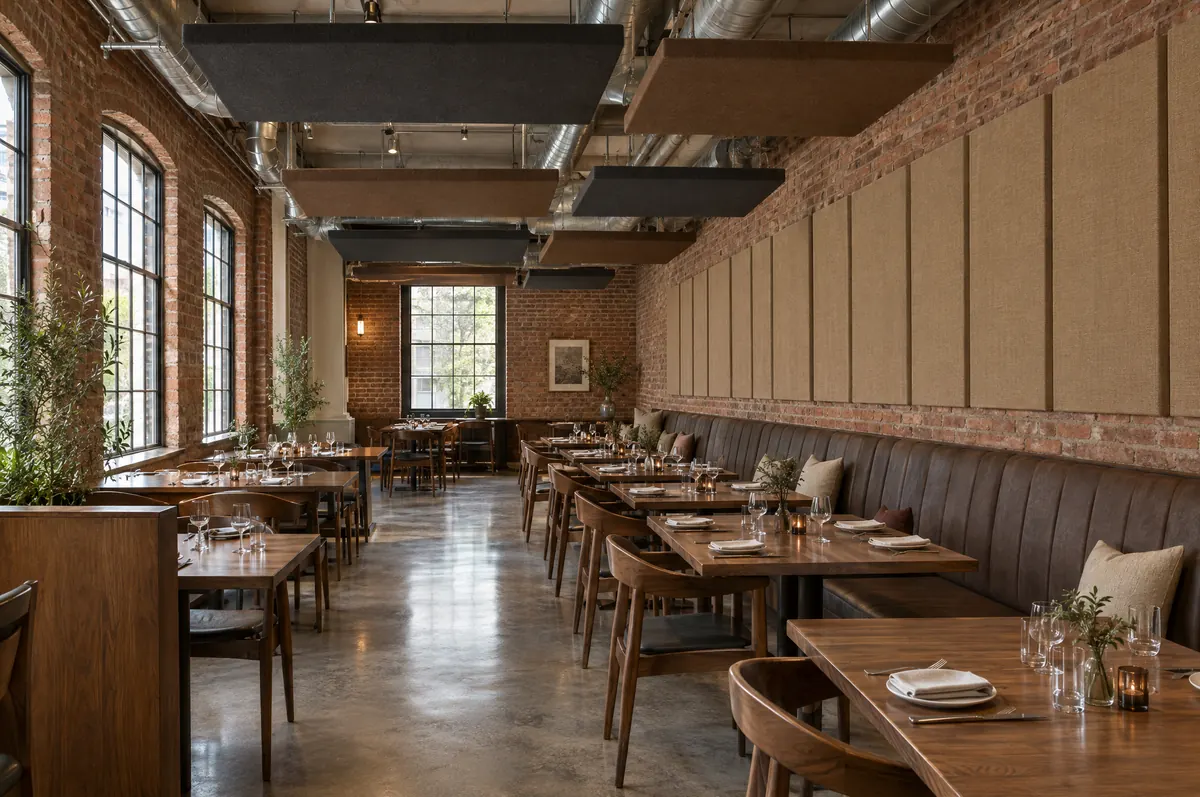
Why rooms get loud
Hard surfaces keep sound bouncing, so everyone talks louder
Reverberation Time (RT60) is how many seconds a sound takes to fade away. Brick, glass, concrete and a bare ceiling bounce sound back into the room instead of soaking it up.
A hard-finish restaurant often rings for 1.2 to 1.6 seconds. The target is 0.5 to 0.9 seconds. Past about 1.0 second, guests talk louder to be heard (the Lombard effect), and that pushes the noise up even more.
In a 2016 Consumer Reports diner survey, noise was the top restaurant complaint, ahead of service.
Sources: Commercial Acoustics, Reverberation Time for Different Rooms; Consumer Reports, Top Restaurant Complaints.
- Restaurant0.5–0.9 s target · 1.2–1.6 s untreated
- Meeting room0.5–0.7 s target · 0.8–1.2 s untreated
- Open office0.4–0.6 s target · 0.9–1.2 s untreated
- Small theatre0.8–1.2 s target · 1.3–1.8 s untreated
Reverberation time (RT60) at speech frequencies, empty room. Source: Commercial Acoustics, Reverberation Time for Different Rooms.
How we prove it
Proof you can see on a graph and hear in a clip
We write the target reverberation time into your proposal, then re-measure after install from the same marked spots.
Microphone spots at ear height, each one marked. The after test uses the same spots, so the two graphs compare fairly.
The range we measure reverberation time across, one band at a time. Speech sits around 500 to 1,000 Hz, near the middle.
A clap and voice recording from one fixed phone spot, before and after. You hear the difference as well as see it.
A calibrated measurement mic, read with Room EQ Wizard (REW) software. A phone app or a clap test gives a ballpark only.
The process
Six steps from a free call to a measured result
Every project is quoted after we measure, because the panel count comes from your room's numbers.
Consult
A free 15-minute call or video chat. Tell us about the room and what bothers you, and we'll tell you if panels can help.
Measure
A paid Sound Assessment takes 45 to 120 minutes on site. The fee is credited to your project if you sign within 30 days.
Render
You get a written plan with your target reverberation time, a concept render in your colours and fabrics, and options to pick from. The report and proposal arrive within 72 hours of the assessment.
Fabricate
The panel area comes from a calculation, so you pay for what the room needs. Each panel is fabricated in Canada, designed specifically for your space.
Install
For businesses, we install after hours or on your closed day. The room is cleaned up before you open.
Prove
We re-measure from the same marked spots. You get the before and after graph and the sound clips.
Rooms we fix
Acoustic panels for Windsor-Essex restaurants, boardrooms and home studios
- Restaurants, bars and cafésKeep the buzz and lose the shouting. The goal is a room where guests talk without raising their voices and stay for dessert.
- Boardrooms and meeting roomsThe goal is a call where people hear you like they're in the room. Microsoft's Teams Rooms guidance says to treat at least two walls.
- Home studios and media roomsMixes that translate and a podcast that sounds clear, in a room the rest of the house still likes.
- How many panels do I need?Enter your room size and a reverberation reading. The calculator gives you a ballpark panel area to start from.
Teams Rooms source: Microsoft Learn, Meeting room guidance for Teams.
We work in Windsor, Tecumseh, LaSalle, Lakeshore, Amherstburg, Essex, Kingsville and Leamington.
Where to start
Start with a free call, then measure when you're ready
You never pay for panels on a guess. Each step tells you whether the next one is worth it.
- Free 15-minute Sound Consult. A phone or video call about your room. You'll know if panels can help and what measuring involves.
- Free 60-second Sound Score for restaurants. Ryley claps in your dining room and reads a ballpark reverberation time on the spot. How the Sound Score works.
- Sound Assessment: $249 home, $495 business. A calibrated measurement, a plan, a render and options. The fee is 100% credited to your project if you sign within 30 days. What the assessment measures.
Built in Canada
One person measures your room, designs the fix and installs the panels
I'm Ryley Demers, a specialist interior contractor, and I measure every room myself. The person who reads your graph is the same person who designs and installs your acoustic panels.
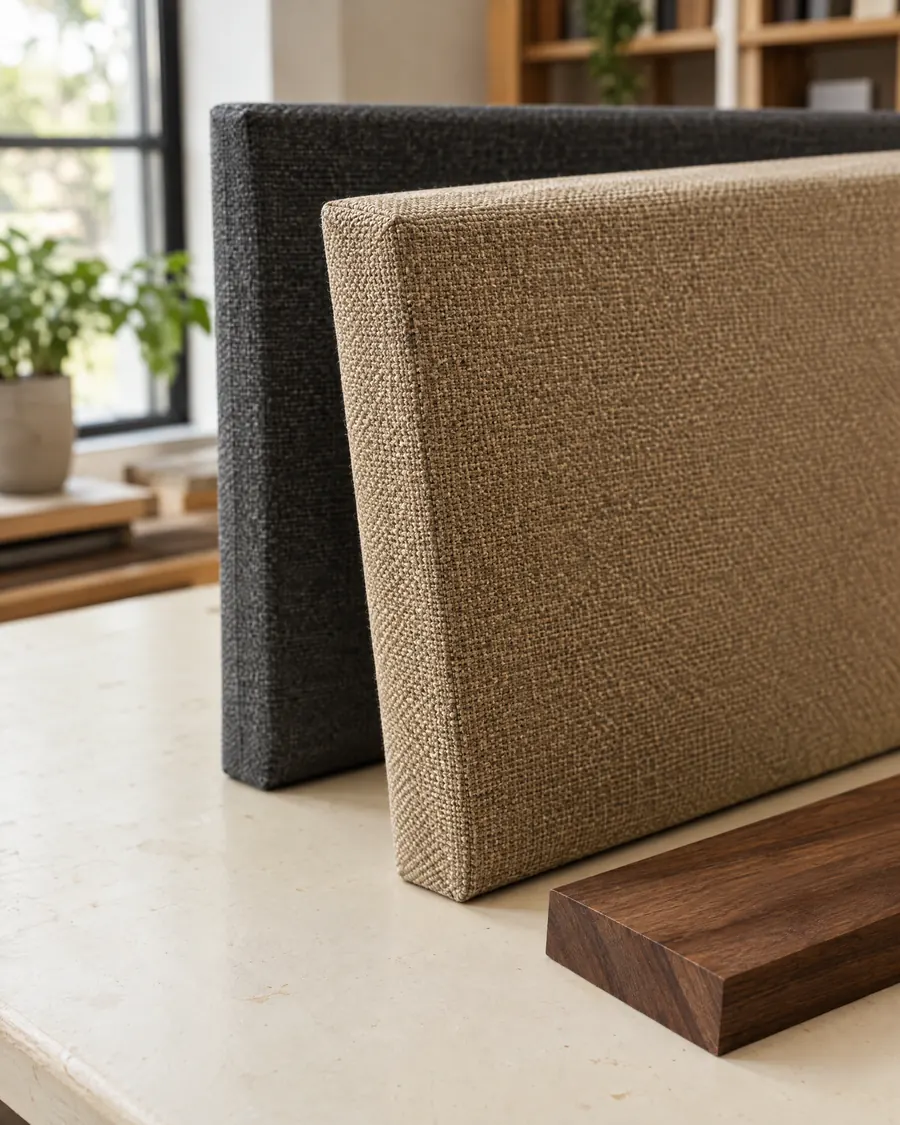
Each panel is fabric-wrapped and cut to size for your room. You pick the fabric and colour, so the panels look like part of the design.
I take on a small number of projects each month. That way I can measure, design, install and check every room myself.
Questions
Will it work, and will it look right?
Short answers to the questions most owners have before a consult.
Will panels make my room look like a studio?
You see a concept render of the fix before anything is built. The panels are made in your colours and fabrics, so they read as part of the room.
How do I know the panels will work?
We measure the room before any panels are made and write the target reverberation time into your proposal. After install, we re-measure from the same marked spots and show you both graphs.
We want buzz. Will it feel dead in here?
For dining rooms we aim for a reverberation time of about 0.6 to 0.8 seconds. That keeps the room lively, and guests can still hear each other across the table.
Do we have to close for the install?
No. Business installs happen after close or on your closed day, and we clean up before you open.
Can't I buy panels online?
You can. With us, you're paying for the measurement, the design, the install and the before and after proof.
What if my budget is small?
Your proposal comes with options, and the work can be done in phases. The assessment fee is credited if you sign within 30 days. For smaller budgets, there's a placement plan and kit you hang yourself.
Find out in 15 minutes if panels can help your room
Tell us about the room on a free call. You'll know if panels can help and what measuring it would involve.